
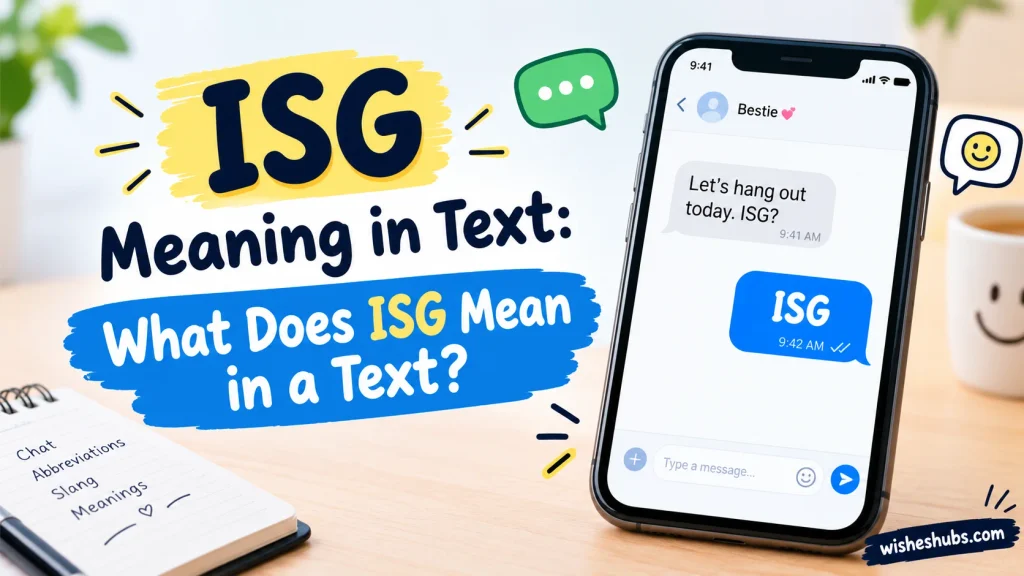
Ever received “ISG” in a message and wondered what those three letters mean? Understanding ISG Meaning in Text helps you interpret casual conversations without confusing slang with formal English usage.
From texting to social media, ISG can carry a meaning that depends on context. This guide explains its definition, tone, grammar, examples, and differences from similar abbreviations. You’ll learn how context shapes meaning when informal language appears outside business communication, meetings, scheduling, or formal writing.
Whether you’re checking a message, managing online conversations, or studying English usage, context keeps interpretation consistent. The article explores practical examples alongside related terms, including calendar, project management, online booking, and broadcasting, while focusing on what ISG means in texting and when its meaning changes.
Quick Answer: What Does ISG Mean in Text?
ISG usually means “I Swear to God” in texting and online conversations.
People use it to add emphasis to what they’re saying. It can communicate strong sincerity, disbelief, frustration, surprise, or determination.
For example:
“ISG, I didn’t touch your charger.”
Here, the sender is emphasizing that they’re telling the truth.
Another example:
“ISG that was the funniest thing I’ve seen all week.”
In this case, ISG adds strong emphasis to the speaker’s reaction.
| Text abbreviation | Common meaning | Typical purpose |
| ISG | I Swear to God | Emphasis or sincerity |
| ISTG | I Swear to God | Strong emphasis or frustration |
| LOL | Laughing Out Loud | Shows amusement |
| OMG | Oh My God | Surprise or excitement |
| TBH | To Be Honest | Introduces an honest opinion |
One important detail: ISG and ISTG can refer to the same phrase, although ISTG is the more explicit and recognizable version in many online conversations.
What Does ISG Stand For in Texting?
In casual texting, ISG stands for “I Swear to God.”
The phrase works as an intensifier. In other words, it makes the statement that follows sound stronger.
Consider the difference:
“I’m telling you, that’s what happened.”
Compared with:
“ISG, that’s what happened.”
The second version carries more emotional weight. The sender wants you to understand that they’re being serious.
The abbreviation doesn’t necessarily mean the person is making a religious statement. In everyday slang, “I swear to God” often functions as an expression of emphasis rather than a formal religious declaration.
Is ISG a Common Texting Abbreviation?
ISG isn’t as universally recognizable as abbreviations such as LOL, IDK, BTW, or OMG. That’s important when interpreting a message.
Different online communities develop their own shorthand. A person who regularly uses slang may understand ISG immediately. Someone unfamiliar with the abbreviation might need context.
That’s also why ISTG can appear more frequently in online conversations. The extra T makes the phrase easier to identify as “I Swear to God.”
If someone sends you “ISG” without any surrounding context, asking what they mean is perfectly reasonable.
How ISG Is Used in Text Messages
The meaning stays broadly connected to “I Swear to God,” but the emotional tone can change dramatically.
A person might use ISG to defend themselves, emphasize an opinion, express frustration, or react strongly to something unexpected.
ISG in Casual Conversations
Friends may use ISG when they want to make a statement sound especially convincing.
For example:
Alex: Did you really finish the whole pizza?
Sam: ISG, I did. I was starving.
Here, ISG emphasizes that Sam isn’t joking.
Another example:
“ISG, that movie was way better than I expected.”
The sender isn’t necessarily angry or upset. They’re simply adding extra emphasis to their opinion.
ISG in Arguments or Serious Conversations
The tone becomes stronger when ISG appears during an argument.
For example:
“ISG, I never said that about you.”
The sender uses the abbreviation to reinforce a denial.
In this setting, ISG can sound defensive. However, the abbreviation itself doesn’t automatically make a message rude. The surrounding words determine much of the emotional tone.
Compare these:
“ISG, you’re right. I completely forgot.”
and
“ISG, stop putting words in my mouth.”
Both contain ISG. Yet the first sounds sincere while the second sounds irritated.
ISG on Social Media
ISG can also appear in comments, direct messages, replies, and other informal online conversations.
For example:
“ISG this song never gets old.”
Or:
“ISG, why did you do that?”
Social media encourages short, expressive language. Abbreviations like ISG fit naturally into that environment because they communicate emotion without requiring a long sentence.
ISG Meaning in Different Contexts
Context is the key to understanding ISG correctly.
An abbreviation can mean one thing in a group chat and something completely different in a workplace document.
| Context | Likely interpretation | What to consider |
| Casual texting | I Swear to God | Look at the surrounding sentence |
| Group chat | I Swear to God | Consider the group’s slang habits |
| Social media | I Swear to God | Check the tone of the post |
| Argument | Strong emphasis | Read the entire exchange |
| Professional message | Could be another acronym | Don’t automatically assume slang |
| Technical discussion | Could have a specialized meaning | Consider the subject |
This distinction matters because ISG isn’t exclusively a texting abbreviation. Organizations, industries, and professional groups can use the same three letters for completely unrelated terms.
So, if you see ISG in a work report, research paper, or technical document, don’t automatically translate it as “I Swear to God.”
Examples of ISG in Text Messages
Seeing realistic examples makes the meaning easier to recognize.
Example 1 — Defending Yourself
“ISG, I didn’t take your headphones.”
Meaning: The sender strongly insists that they didn’t take the headphones.
The abbreviation adds emphasis to the denial.
Example 2 — Expressing Surprise
“ISG, I thought you were already home.”
Here, the sender uses ISG to strengthen their reaction to unexpected information.
Example 3 — Strong Opinion
“ISG, that’s the best burger I’ve ever had.”
The sender isn’t necessarily angry. They’re simply emphasizing how strongly they feel.
Example 4 — Frustration
“ISG, you’ve asked me that five times already.”
Here, ISG contributes to an irritated tone.
Example 5 — Casual Humor
“ISG, my dog looked at me like I owed him rent.”
The abbreviation adds dramatic emphasis to an obviously humorous observation.
These examples show why you shouldn’t interpret ISG from the abbreviation alone. The surrounding sentence gives you the real clue.
What Does ISG Mean From a Guy?
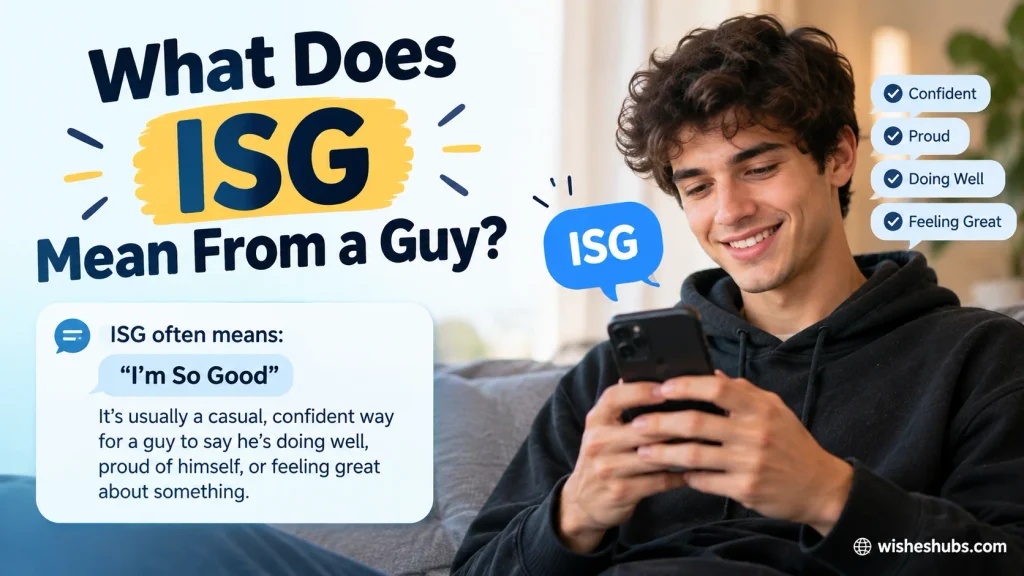
When a guy sends ISG, the basic slang meaning doesn’t automatically change.
In most casual texting situations, it still means “I Swear to God.”
However, people sometimes search for gender-specific meanings because they want to know what a particular message implies.
For example:
“ISG, I wasn’t talking to her.”
This could be a serious denial.
Meanwhile:
“ISG, you’re hilarious 😂”
could simply emphasize a positive reaction.
The important distinction is between the meaning of the abbreviation and the intention behind the message.
ISG provides emphasis. The rest of the conversation provides context.
What Does ISG Mean From a Girl?
The same principle applies when a girl uses ISG.
ISG generally doesn’t acquire a separate definition based on the sender’s gender.
For example:
“ISG, I forgot we had plans today.”
The abbreviation emphasizes the statement.
Likewise:
“ISG, that was so embarrassing.”
Here, it strengthens an emotional reaction.
Rather than looking for a hidden “girl meaning” or “guy meaning,” examine the actual conversation. The words before and after ISG usually reveal far more.
Also Read This: TBT Meaning: What Does TBT Mean in Texting and Social Media?
Is ISG Rude or Offensive?
ISG isn’t inherently rude or offensive.
Its tone depends on how someone uses it.
In a friendly conversation, it can sound playful:
“ISG, you’re impossible 😂.”
During an argument, however, it can sound confrontational:
“ISG, I’m done explaining this.”
The same abbreviation can therefore appear in completely different emotional situations.
What Can Make ISG Sound Harsh?
Several factors influence the tone:
- Capitalization: “ISG” can look more emphatic than lowercase slang.
- Punctuation: Exclamation marks can increase intensity.
- Surrounding words: Insults or accusations can make the message hostile.
- Conversation history: An ongoing argument changes how the phrase feels.
- Emoji use: Emojis can soften or exaggerate the intended tone.
- Relationship: Close friends may use stronger language casually.
So, don’t label a message rude simply because it contains ISG.
How to Reply When Someone Texts ISG
Your response depends on what the sender means in that particular conversation.
If You Understand What They Mean
You can simply respond to the actual statement.
“Yeah, I believe you.”
Or:
“Honestly, same.”
There’s no need to discuss the abbreviation itself.
If You Don’t Understand ISG
Ask directly.
“What do you mean by ISG?”
That’s often better than guessing. Text slang changes quickly and varies between communities.
If the Message Sounds Serious
Focus on the substance of the message.
For example:
“ISG, I didn’t tell anyone your secret.”
A useful response would address the accusation:
“Okay, I understand. I wasn’t accusing you.”
If You’re Unsure Whether They’re Joking
Look at the surrounding conversation.
If the person frequently uses exaggerated language or emojis, ISG may simply add playful emphasis. If the conversation involves a serious disagreement, the same phrase may carry much more weight.
ISG vs. Similar Texting Abbreviations
ISG can be confused with other short forms, especially ISTG.
ISG vs. ISTG
Both can represent “I Swear to God.”
The main difference is the spelling of the abbreviation.
- ISG: I Swear to God
- ISTG: I Swear to God
ISTG includes the T from “to.” ISG leaves that word out.
Because ISTG more closely mirrors the individual words, some readers recognize it more quickly.
ISG vs. OMG
These aren’t interchangeable.
OMG means “Oh My God.”
People generally use OMG to express surprise, excitement, shock, or disbelief.
For example:
“OMG, you actually won!”
ISG instead emphasizes a statement:
“ISG, you actually won!”
The emotional effect is different.
ISG vs. TBH
TBH means “To Be Honest.”
It often introduces an opinion or candid statement:
“TBH, I don’t like that song.”
ISG doesn’t serve the same grammatical purpose. It adds emphasis rather than introducing honesty as a conversational transition.
Other Meanings of ISG
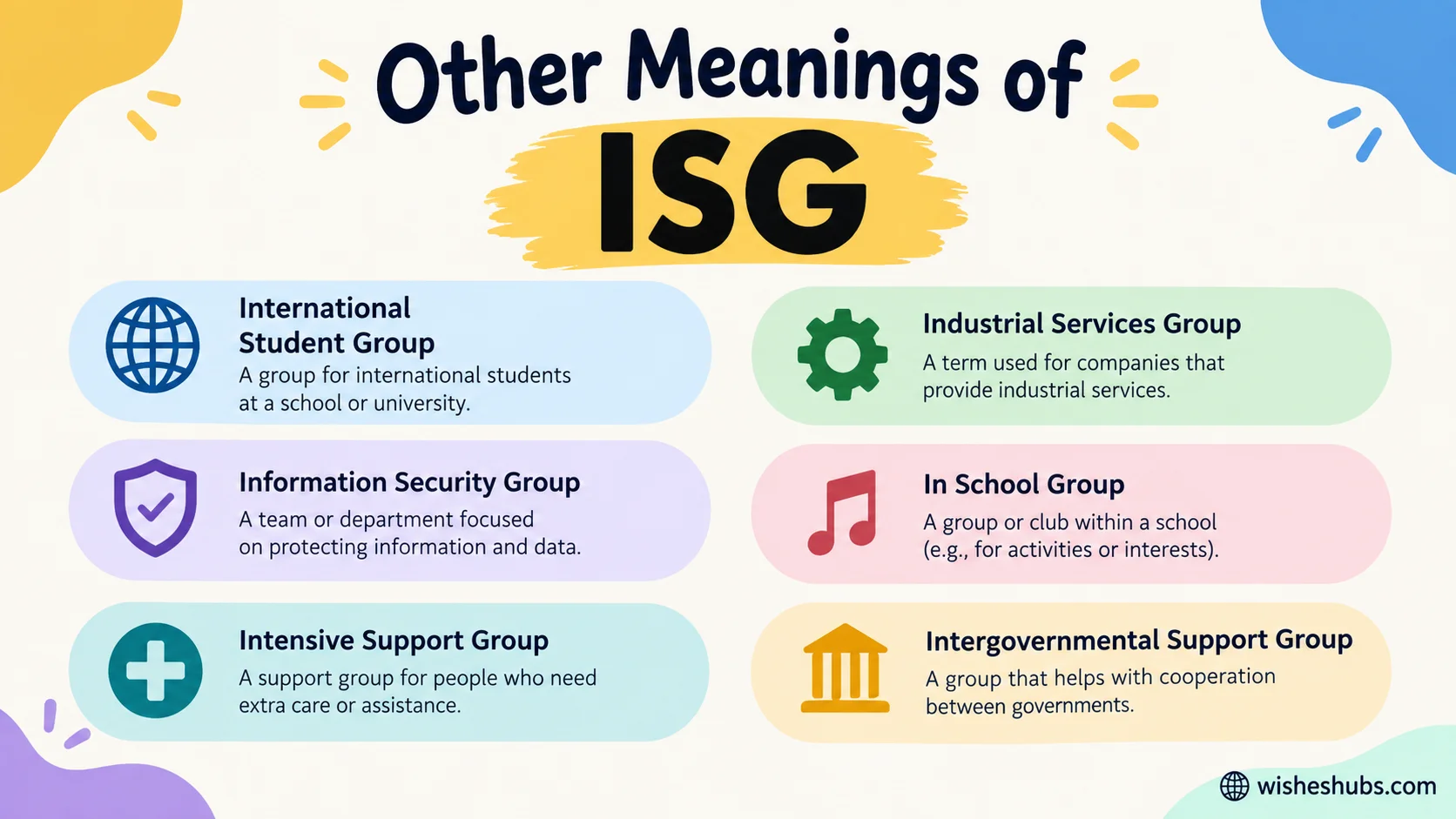
Although “I Swear to God” is a recognized texting interpretation, ISG can also function as an acronym in other fields.
This is where context becomes essential.
A message such as:
“ISG, I can’t believe you did that.”
strongly resembles informal slang.
A sentence such as:
“Please review the ISG requirements before the meeting.”
looks completely different. In a professional or technical environment, ISG could represent an organization, system, standard, group, or specialized term.
Therefore, there isn’t one universal definition of ISG across every situation.
When the surrounding conversation is informal, the texting interpretation makes sense. When the subject is technical or professional, investigate the specific context instead.
How to Tell Which ISG Meaning Someone Intended
When a message feels unclear, use the surrounding clues.
Look at the Entire Sentence
Don’t interpret ISG in isolation. Read the words around it.
“ISG, that’s exactly what happened.”
The emphasis strongly supports the slang interpretation.
Consider the Conversation
Ask yourself what the people were discussing immediately beforehand.
A conversation about relationships, friends, school, games, or everyday life is more likely to contain slang.
Check the Tone
Is the sender joking, defending themselves, complaining, or celebrating?
Tone can reveal how strongly the sender intends the phrase.
Consider the Platform
Informal texting, social media comments, and group chats commonly use abbreviations.
A corporate report deserves a different interpretation.
Look at Previous Messages
People develop personal texting habits. If someone repeatedly uses informal abbreviations, ISG is more likely to have its slang meaning.
Ask When Necessary
Sometimes there’s simply not enough information.
A quick:
“What does ISG mean here?”
can eliminate the guesswork.
That’s better than confidently interpreting an abbreviation incorrectly.
A Practical Example: Reading ISG in Context
Imagine receiving this message:
“ISG, I didn’t know you were coming tonight!”
At first glance, ISG might look confusing.
Now break down the message:
- The conversation is informal.
- The subject concerns plans.
- The sender expresses surprise.
- ISG appears before the main statement.
- The phrase “I Swear to God” fits naturally as an emphasis marker.
The intended meaning is therefore likely “I Swear to God.”
Now consider this:
“The ISG protocol must be updated before deployment.”
That sentence sounds technical. “I Swear to God” clearly doesn’t fit the context.
This simple comparison illustrates an important rule:
An abbreviation’s surrounding words often matter more than the abbreviation itself.
Common Mistakes When Interpreting ISG
Even familiar texting abbreviations can cause confusion.
Assuming Every ISG Means the Same Thing
Three letters don’t guarantee one universal definition.
Always consider context.
Confusing ISG With ISTG
Both can refer to “I Swear to God,” but they aren’t spelled identically.
Assuming ISG Is Automatically Aggressive
ISG can sound serious, playful, frustrated, or enthusiastic.
The rest of the message determines the tone.
Looking for a Secret Gender-Specific Meaning
There isn’t a separate standard definition of ISG simply because a guy or girl sends it.
The conversation matters more.
Ignoring Professional Context
If ISG appears in a business or technical document, don’t force a slang interpretation onto it.
FAQs:
What does ISG mean in texting?
ISG commonly means “I Swear to God” in texting. People use it to emphasize a statement or communicate strong sincerity.
What does ISG stand for in a text?
In casual texting, ISG stands for “I Swear to God.” It usually acts as an emphasis phrase.
Is ISG the same as ISTG?
They can have the same meaning. Both ISG and ISTG can represent “I Swear to God.” ISTG includes the “T” from “to.”
Is ISG slang?
Yes, ISG can function as informal texting slang when someone uses it to mean “I Swear to God.” However, ISG can also represent unrelated acronyms in professional or technical contexts.
Is ISG rude?
Not necessarily. ISG can sound casual, serious, humorous, or frustrated depending on the surrounding message.
What does ISG mean from a guy?
The standard texting interpretation doesn’t change based on gender. A guy using ISG will commonly mean “I Swear to God” when the conversation is informal.
What does ISG mean from a girl?
The same applies here. A girl using ISG can commonly mean “I Swear to God.” Her gender doesn’t create a separate standard definition.
What does ISG mean on social media?
On social media, ISG can mean “I Swear to God” when used as casual slang. The surrounding post or comment helps confirm the meaning.
How should you respond to ISG?
Respond to the actual message rather than the abbreviation. If you don’t understand the intended meaning, simply ask the sender what they mean.
Can ISG have another meaning?
Yes. ISG can represent different terms outside casual texting, particularly in professional, organizational, or technical contexts. The subject of the conversation determines which definition fits.
Conclusion:
Understanding ISG Meaning in Text is easier when you consider the surrounding conversation. In casual texting, ISG commonly means “I Swear to God” and adds emphasis, sincerity, surprise, or frustration.
However, context can change its meaning in professional or technical settings. When you’re unsure, read the complete message or ask the sender directly. That simple approach helps you interpret texting slang accurately.

Anna Brown is a passionate writer at WishesHubs, sharing heartfelt wishes, quotes, and messages for every special moment.







1 thought on “ISG Meaning in Text: What Does ISG Mean in a Text?”